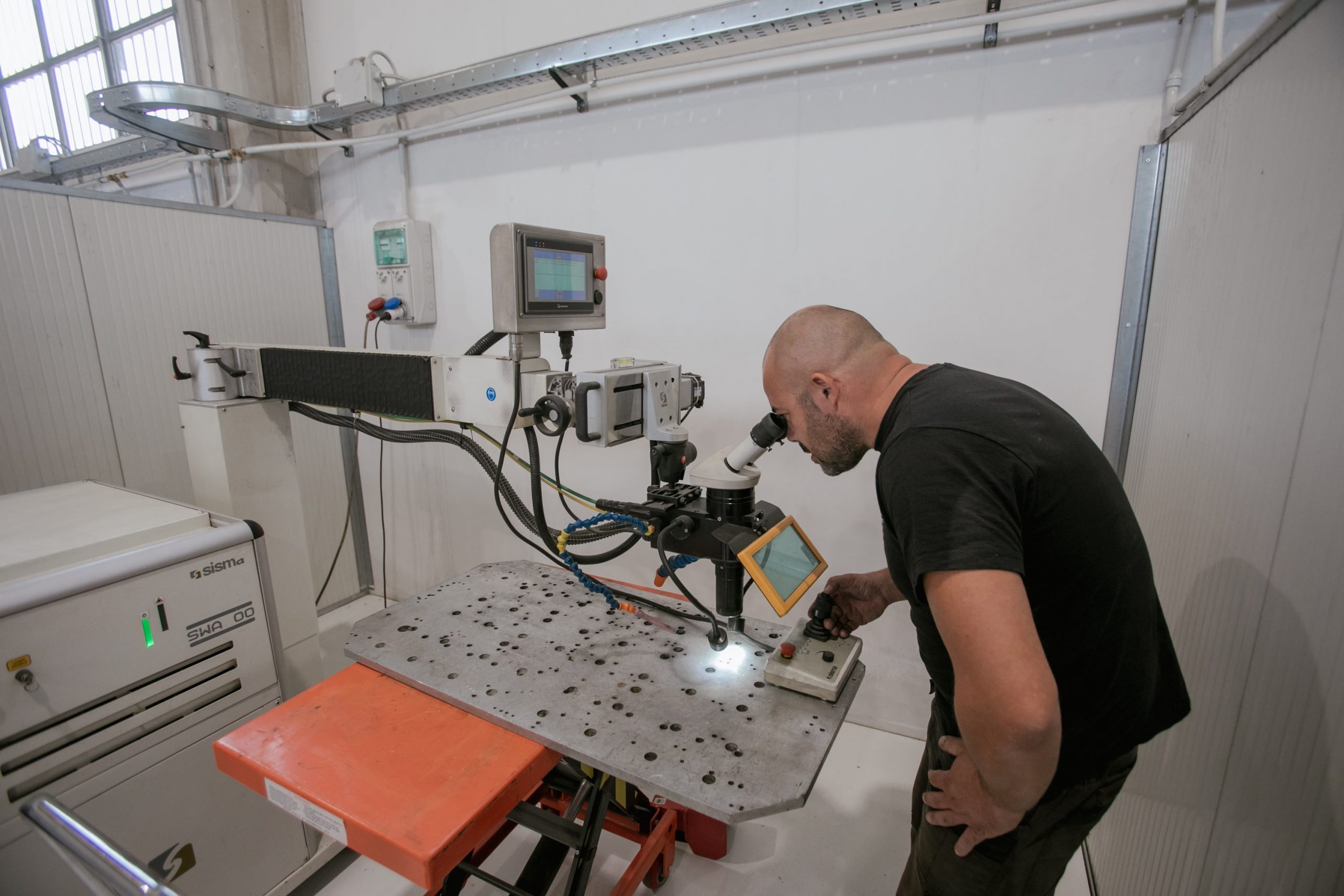
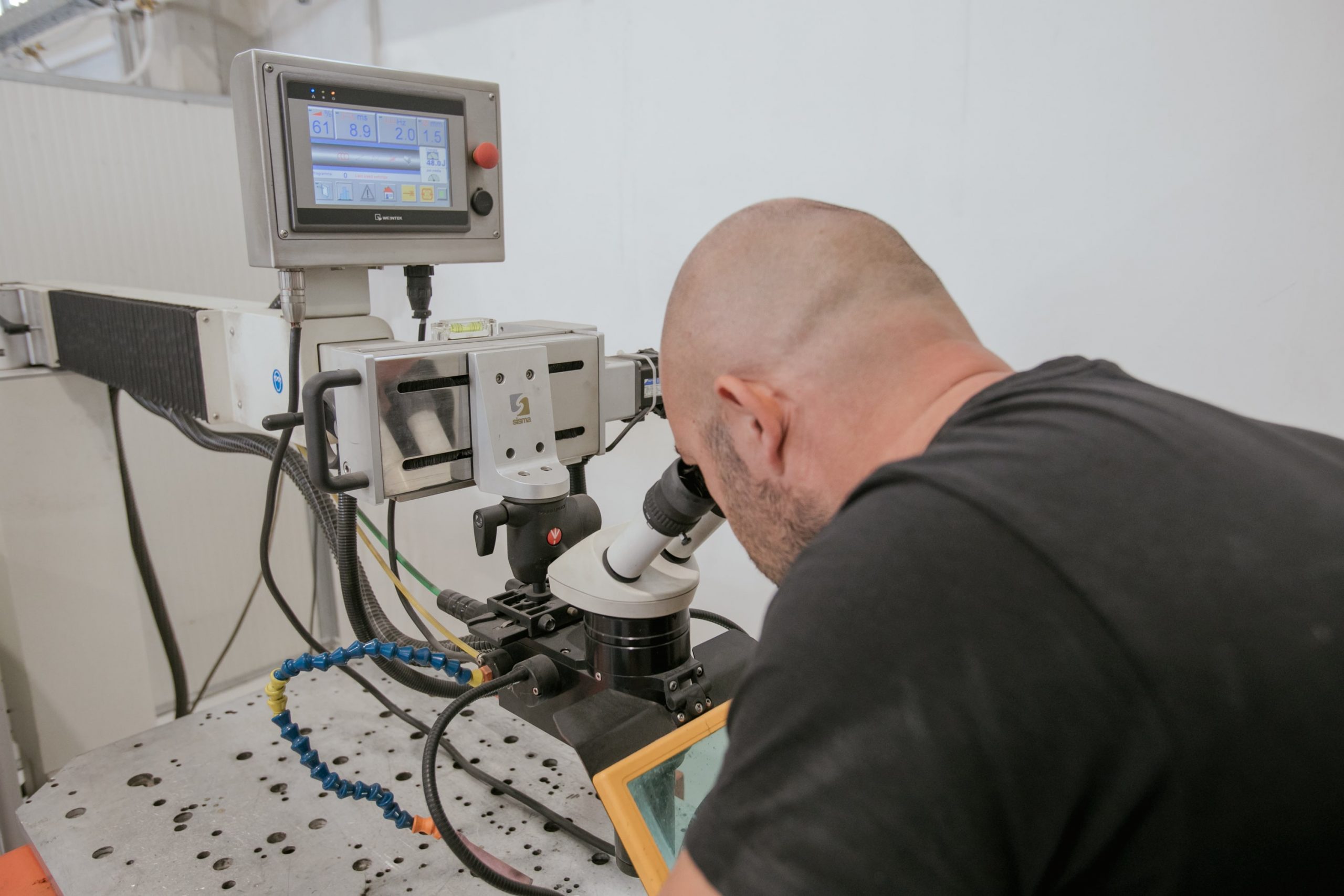
Laser welding is an advanced technology for joining metals with extreme precision. Due to the high energy density of the laser beam, it produces high-strength, clean welds with minimal thermal distortion. This process enables the joining of thin-gauge components or the creation of deep-penetration welds, even on materials traditionally considered difficult to weld.
Advantages of Laser Welding
High precision and aesthetic quality of the joint
Reduced heat-affected zone
Ability to weld metals with high melting points or high thermal conductivity
Fast processing times and repeatable results
Thanks to the small amount of molten material and precise heat control, laser welds makes it possible to work with materials that would be complex or impossible to weld using other techniques.
Laser Brazing and Filler Materials
When required, the process can incorporate filler materials. In laser brazing, the laser melts the filler material to join the workpieces without melting the base metal itself. This ensures a perfectly smooth, uniform surface that often eliminates the need for secondary grinding or finishing.
Industrial Applications
Laser welding processes are applied in numerous industrial sectors, including:
automotive industry
precision metalworking
production of mechanical components
work on steel, aluminum, and special alloys
In particular, laser welding and brazing are widely used in the automotive sector for the production of roofs, hoods, and structural parts.
Previous
Next
Utilizzando questo sito, accetti che noi e i nostri partner possiamo impostare cookie tecnici, statistici e di profilazione come da nostra Cookie Policy
This website uses cookies to improve your experience while you navigate through the website. Out of these, the cookies that are categorized as necessary are stored on your browser as they are essential for the working of basic functionalities of the website. We also use third-party cookies that help us analyze and understand how you use this website. These cookies will be stored in your browser only with your consent. You also have the option to opt-out of these cookies. But opting out of some of these cookies may affect your browsing experience.