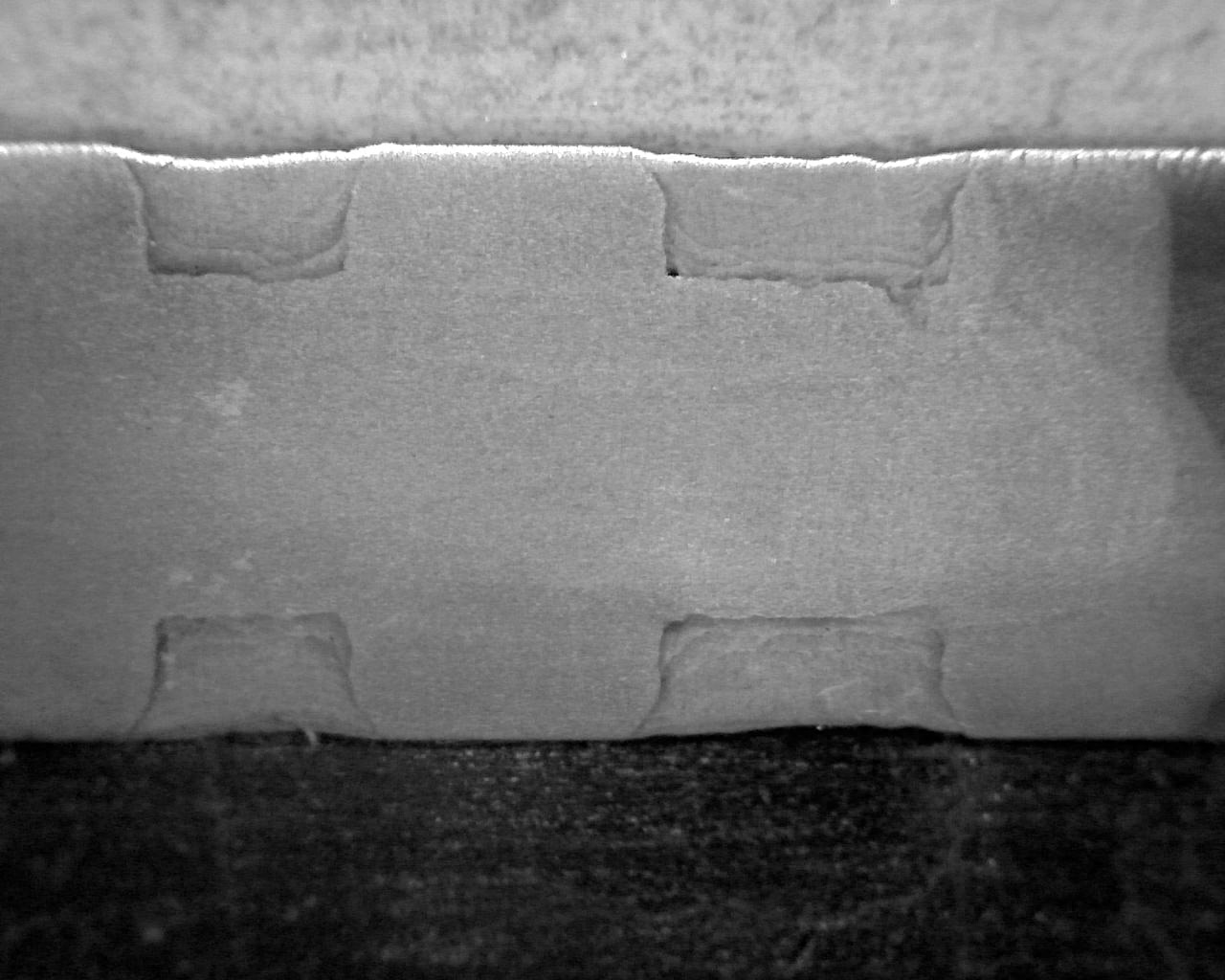
In metallurgy, macrography and micrography are analysis techniques used to study the structure of metals at different levels of detail.
Macrography
Macrography consists of examining a sample with the naked eye or at low magnifications (usually up to 10–25x), often using a stereomicroscope.
Purpose: To provide an overall view of the material structure and macroscopic defects.
What it detects: Forging flow lines, porosity, surface cracks, heat-affected zones in welds, and lack of fusion.
Procedure: The sample is cut, polished, and subjected to a “chemical etching” (macro-etching) process using acidic reagents to highlight the structure.
Micrography
Micrography is the analysis of the internal structure at high magnifications (above 50–100x), carried out using optical or electron microscopes (SEM).
Purpose: To study the microstructure, crystalline phases, and material properties at a microscopic level.
What it detects: Size and shape of crystalline grains, non-metallic inclusions, precipitates, micro-cracks, and structural constituents (such as ferrite, pearlite, etc.).
Utilizzando questo sito, accetti che noi e i nostri partner possiamo impostare cookie tecnici, statistici e di profilazione come da nostra Cookie Policy
This website uses cookies to improve your experience while you navigate through the website. Out of these, the cookies that are categorized as necessary are stored on your browser as they are essential for the working of basic functionalities of the website. We also use third-party cookies that help us analyze and understand how you use this website. These cookies will be stored in your browser only with your consent. You also have the option to opt-out of these cookies. But opting out of some of these cookies may affect your browsing experience.