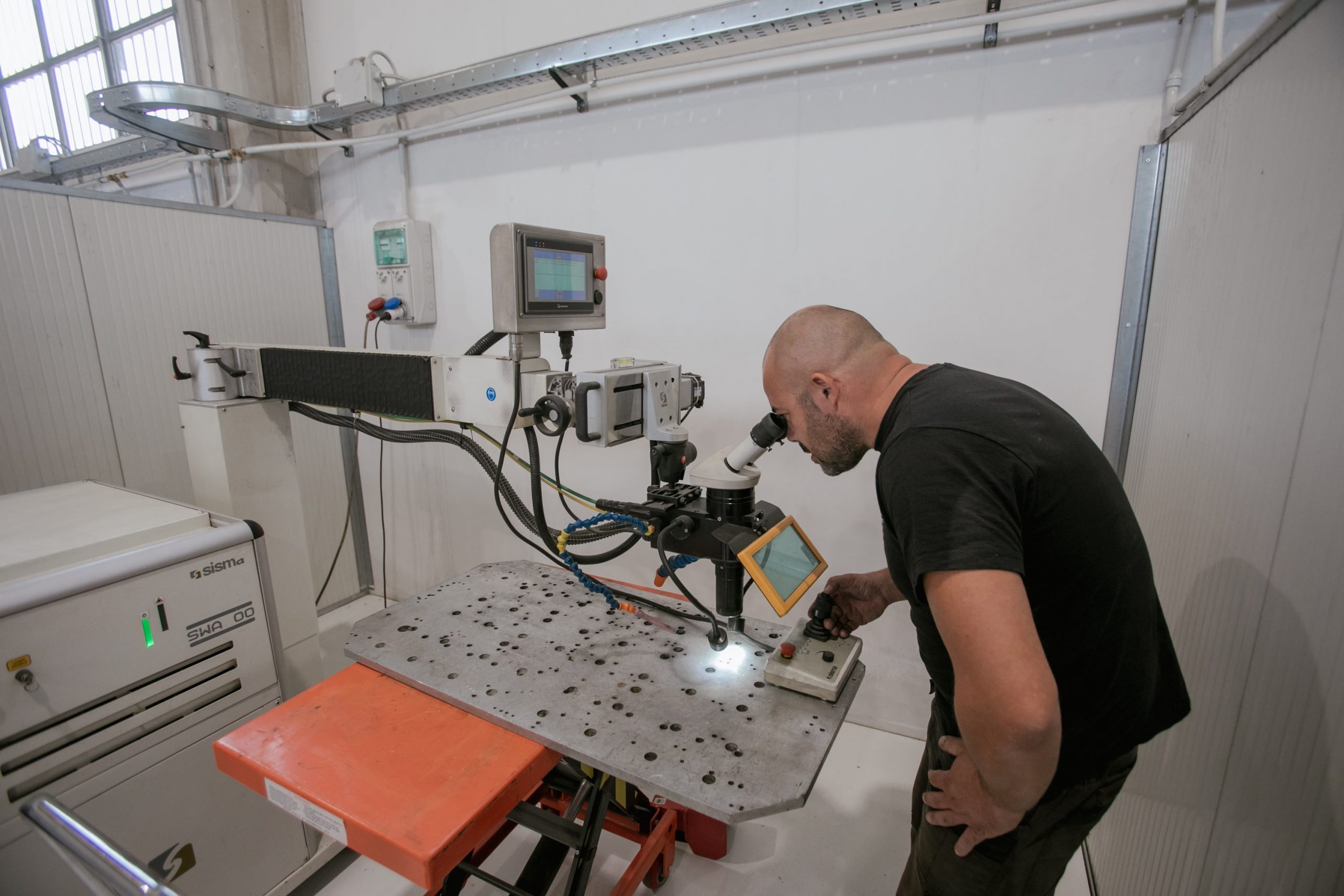
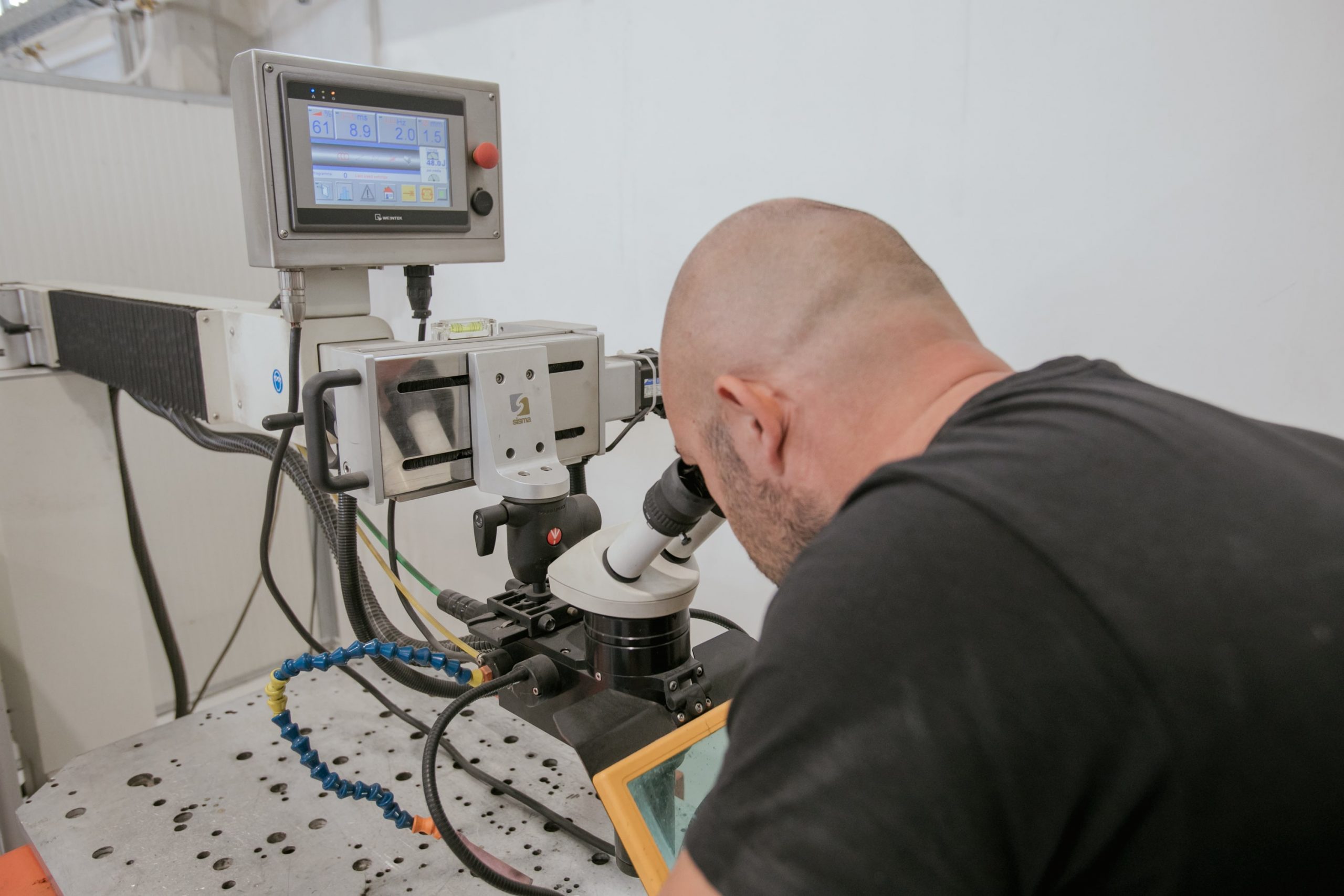
Le saldature a laser rappresentano una tecnologia avanzata per la giunzione di metalli ad alta precisione. Grazie all’elevata concentrazione di energia del raggio laser, è possibile realizzare saldature resistenti, pulite e con una minima deformazione termica del materiale.
Il processo di saldatura laser consente di fissare componenti metallici su superfici piane o di realizzare giunti profondi e uniformi, anche su materiali difficili da saldare con metodi tradizionali.
Vantaggi della saldatura laser
Elevata precisione e qualità estetica del giunto
Ridotta zona termicamente alterata
Possibilità di saldare metalli ad alta temperatura di fusione o alta conducibilità termica
Tempi di lavorazione rapidi e risultati ripetibili
Grazie alla ridotta quantità di materiale fuso e al controllo preciso del calore, le saldature a laser permettono di lavorare materiali che con altre tecniche risulterebbero complessi o impossibili da saldare.
Brasatura laser e materiali d’apporto
Quando necessario, la saldatura può essere eseguita con l’utilizzo di materiali d’apporto. Nella brasatura laser, un filo metallico collega le parti da unire, garantendo una superficie liscia, uniforme e priva di imperfezioni. Il risultato è un giunto esteticamente pulito, che non richiede lavorazioni di finitura successive.
Applicazioni industriali delle saldature a laser
Le lavorazioni di saldatura laser trovano applicazione in numerosi settori industriali, tra cui:
industria automobilistica
carpenteria metallica di precisione
produzione di componenti meccanici
lavorazioni su acciaio, alluminio e leghe speciali
In particolare, la saldatura e brasatura laser sono ampiamente utilizzate nel settore automotive per la realizzazione di tetti, cofani e parti strutturali.
Precedente
Successivo
Utilizzando questo sito, accetti che noi e i nostri partner possiamo impostare cookie tecnici, statistici e di profilazione come da nostra Cookie Policy
This website uses cookies to improve your experience while you navigate through the website. Out of these, the cookies that are categorized as necessary are stored on your browser as they are essential for the working of basic functionalities of the website. We also use third-party cookies that help us analyze and understand how you use this website. These cookies will be stored in your browser only with your consent. You also have the option to opt-out of these cookies. But opting out of some of these cookies may affect your browsing experience.
Necessary cookies are absolutely essential for the website to function properly. These cookies ensure basic functionalities and security features of the website, anonymously.
Cookie
Durata
Descrizione
cookielawinfo-checbox-analytics
11 months
This cookie is set by GDPR Cookie Consent plugin. The cookie is used to store the user consent for the cookies in the category "Analytics".
cookielawinfo-checbox-functional
11 months
The cookie is set by GDPR cookie consent to record the user consent for the cookies in the category "Functional".
cookielawinfo-checbox-others
11 months
This cookie is set by GDPR Cookie Consent plugin. The cookie is used to store the user consent for the cookies in the category "Other.
cookielawinfo-checkbox-necessary
11 months
This cookie is set by GDPR Cookie Consent plugin. The cookies is used to store the user consent for the cookies in the category "Necessary".
cookielawinfo-checkbox-performance
11 months
This cookie is set by GDPR Cookie Consent plugin. The cookie is used to store the user consent for the cookies in the category "Performance".
viewed_cookie_policy
11 months
The cookie is set by the GDPR Cookie Consent plugin and is used to store whether or not user has consented to the use of cookies. It does not store any personal data.
Functional cookies help to perform certain functionalities like sharing the content of the website on social media platforms, collect feedbacks, and other third-party features.
Performance cookies are used to understand and analyze the key performance indexes of the website which helps in delivering a better user experience for the visitors.
Analytical cookies are used to understand how visitors interact with the website. These cookies help provide information on metrics the number of visitors, bounce rate, traffic source, etc.
Advertisement cookies are used to provide visitors with relevant ads and marketing campaigns. These cookies track visitors across websites and collect information to provide customized ads.